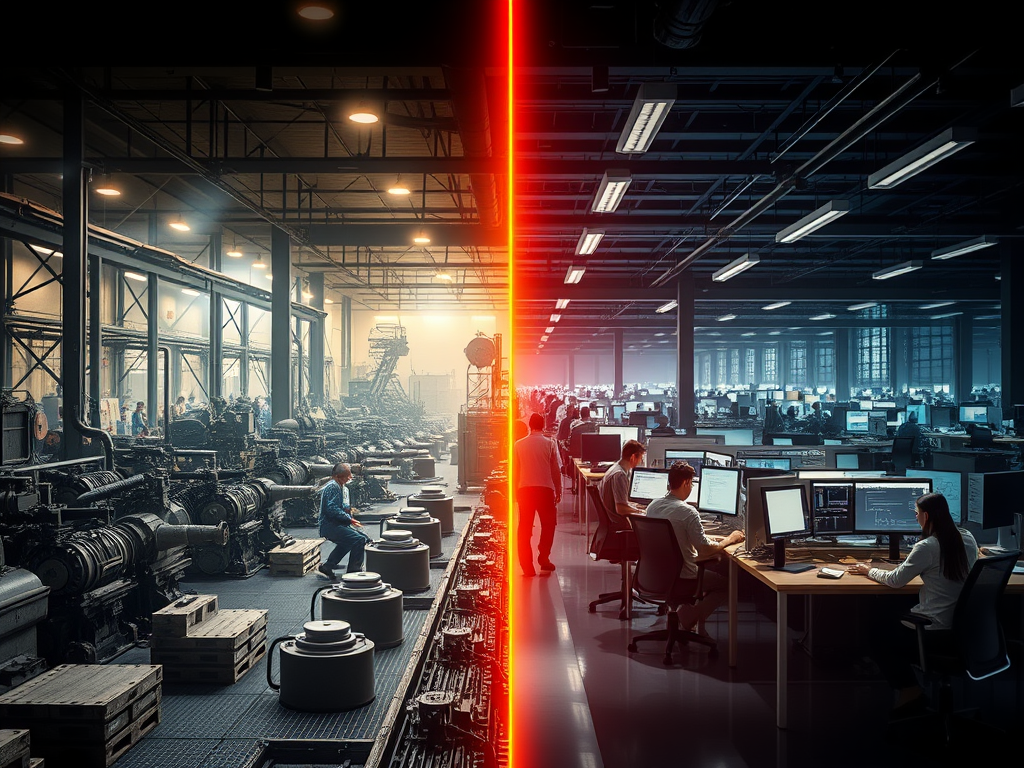
The Industrial Revolution and the ongoing Technology Revolution are transformative periods that reshaped industries, society, and the global economy. These revolutions not only affected innovation and production but also had profound effects on jobs, skills, and how individuals and businesses adapt to new realities. In this blog post, we’ll explore the differences and similarities between these two eras. We will focus on the workforce and skill demands. Additionally, we will look at how to sustain success.
Key Differences Between the Two Revolutions
Change in Jobs
- Industrial Revolution:
- Jobs shifted from agricultural work to factory-based roles. Mechanized production replaced manual labor, leading to the rise of factory workers, machinists, and industrial managers.
- Many traditional crafts were rendered obsolete, leading to job displacement for artisans and small-scale producers.
- Technology Revolution:
- Jobs are shifting from manual and routine tasks to knowledge-based roles. Examples of these roles include software developers, data analysts, AI engineers, and digital marketers.
- Automation and AI are replacing repetitive jobs in manufacturing, retail, and some white-collar professions. Nonetheless, they are also creating new job opportunities in tech-driven fields.
Skills Needed
- Industrial Revolution:
- Workers needed mechanical skills and basic literacy to operate machinery.
- Specialized skills for factory maintenance and production were often learned on the job or through apprenticeships.
- Technology Revolution:
- Information Literacy Skills including digital literacy, coding, problem-solving, critical thinking, and adaptability are key skills.
- Lifelong learning and up-skilling are essential as technologies like artificial intelligence, cloud computing, and blockchain evolve rapidly.
Adapting to Change
- Industrial Revolution:
- Workers faced long hours and harsh conditions with little immediate support to adapt to industrialization. Labor unions eventually emerged to protect workers’ rights.
- Governments and education systems were slow to adapt, leading to social unrest in many regions.
- Technology Revolution:
- Adaptation is faster due to access to online learning platforms, certification programs, and training initiatives.
- Companies and governments are investing in upskilling programs to help workers transition into tech-driven roles, though gaps persist.
Success and Sustaining Job Types
- Industrial Revolution:
- Jobs in manufacturing, transportation, and construction flourished. Success required physical endurance, specialization, and compliance with industrial processes.
- Sustaining a job meant staying in one field or factory for decades.
- Technology Revolution:
- Jobs in software development, AI, biotechnology, and e-commerce are thriving. Success requires innovation, creativity, and staying updated with emerging technologies.
- Sustaining jobs now requires continuous learning, adaptability, and the ability to pivot to new industries.
Key Similarities Between the Two Revolutions
Disruption of Traditional Jobs
Both revolutions disrupted existing job markets. The Industrial Revolution replaced many manual agricultural roles, while the Technology Revolution is automating routine jobs across all sectors.
Demand for New Skills
Each era required workers to learn new skills to thrive. Just as industrial workers needed to understand machines, today’s workforce must master digital tools and technologies.
Opportunities for Innovation
Both revolutions created opportunities for entrepreneurship and innovation. During the Industrial Revolution, new inventions like the spinning jenny and steam engine revolutionized industries. Today, digital startups and tech innovators are leading the way.
Social Inequality
Both periods widened income gaps before eventually leading to broader economic benefits. Those who adapted to new skills and roles gained more opportunities, while others struggled to keep up.
Recommendations for Adapting and Thriving in the Technology Revolution
- Invest in Lifelong Learning
Workers and businesses must focus on continuous education to stay relevant. Online courses, workshops, and certification programs in tech skills are valuable resources. - Develop Soft Skills
Creativity, emotional intelligence, communication, critical thinking, and problem-solving are as critical as technical skills. These human skills complement automation and technology. - Leverage Technology for Growth
Embrace tools like AI, data analytics, and automation to enhance productivity. Businesses and individuals that integrate these technologies into their workflows gain a competitive edge. - Promote Flexibility and Adaptability
Unlike the Industrial Revolution, where job roles were rigid, the Technology Revolution demands flexibility. Be open to changing careers or industries and embracing remote or hybrid work models. - Collaborate Across Sectors
Governments, businesses, and educational institutions must work together to bridge skill gaps and offer accessible training programs. - Focus on Sustainable Innovation
Adopt eco-friendly technologies and practices to reduce environmental impact while driving growth. Sustainability is becoming a key factor in long-term success.
Conclusion
The Industrial Revolution and the Technology Revolution have revolutionized work and society in distinct but interconnected ways. The Industrial Revolution introduced mechanization and urbanization. The Technology Revolution has ushered in a digital age. In this era, adaptability and innovation are paramount. Understanding the differences and similarities between these two eras can help us navigate the challenges and opportunities of today’s fast-changing world.
By investing in skills, fostering adaptability, and embracing innovation, individuals and organizations can thrive and secure a sustainable future in the era of the Technology Revolution.
 Dr. Roukana
Leave a comment